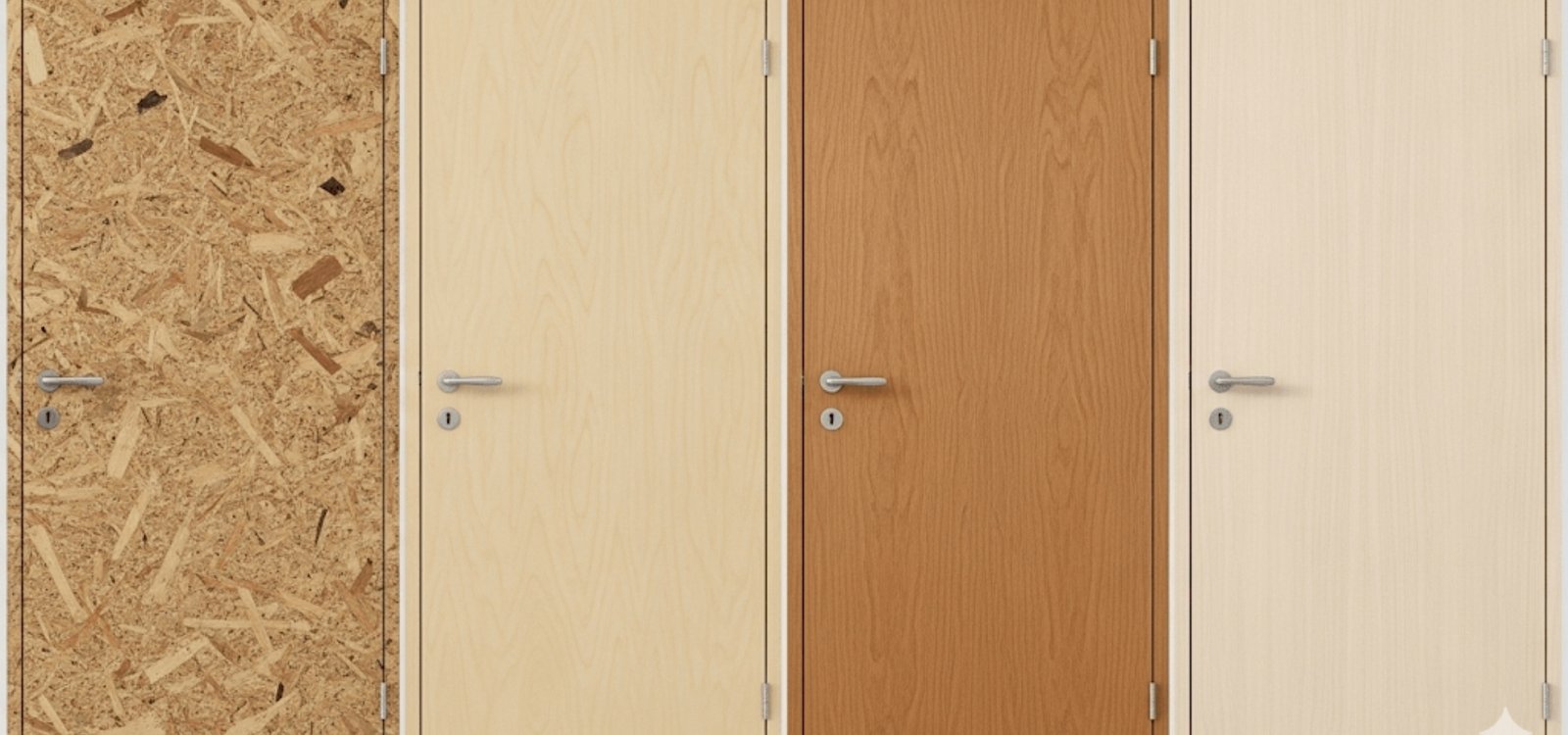
In India, there are more than 2,000 wood-based flush door manufacturing units, the majority of which operate within the MSME sector. A substantial number of these units are integrated with plywood manufacturing facilities, allowing for efficient utilisation of raw materials and shared infrastructure. These manufacturers primarily rely on wood-based inputs such as rotary-cut veneers, wooden battens recovered after log peeling, plywood, MDF, particleboard, and block board. The wood-based flush door industry thus forms a vital downstream segment of the country's broader wood-based panel and building materials ecosystem.
Flush doors, distinguished by their smooth and flat surfaces with a core sandwiched between plywood, MDF, or other engineered wood facings, have emerged as the preferred choice for interior applications across residential, commercial, and institutional buildings. Their clean and contemporary appearance, dimensional stability, uniform performance, ease of installation, and cost-effectiveness have contributed to widespread acceptance. Flush doors are extensively used in urban housing projects, offices, hotels, hospitals, educational institutions, and other infrastructure developments. With rapid urbanisation, sustained growth in the real estate sector, and an increasing preference for modern interior solutions, demand for flush doors has shown steady growth across the country.
Manufacturing of wood-based flush doors in India spans a wide spectrum, ranging from small, unorganised workshops using manual processes to large, organised and semi-automated plants equipped with modern machinery. The production process typically involves the use of seasoned timber or engineered wood cores, combined with plywood or fibreboard facings, bonded under controlled heat and pressure using synthetic resin adhesives. In recent years, the industry has increasingly shifted towards engineered wood products such as blockboard and particleboard, which help reduce dependence on scarce natural timber while ensuring consistent quality, improved dimensional stability, and better resource efficiency. Product quality and performance are guided by Indian Standards, particularly IS 2202, which lays down specifications related to construction, strength, moisture resistance, and durability. Adherence to these standards has played a key role in improving product reliability and enhancing consumer confidence.
Market growth is primarily driven by expanding residential construction, especially in the affordable and mid-income housing segments, along with strong demand from commercial and institutional projects where flush doors are preferred for their uniformity and functional performance. The renovation and replacement market also provides a significant boost, as traditional panelled or solid wood doors are increasingly replaced with engineered flush doors. Leading plywood and panel manufacturers have diversified into branded flush door offerings, introducing value-added features such as decorative veneers, laminates, pre-laminated surfaces, fire-retardant properties, termite resistance, and enhanced moisture protection. However, a large share of production continues to come from the unorganised sector, which leads to variations in product quality, inconsistent compliance with standards, and uneven market perception.
Despite its positive growth trajectory, the industry faces several challenges. These include rising raw material costs, limited and inconsistent availability of quality timber, and non-adoption of Indian Standards, particularly among smaller and unorganised manufacturers. Additionally, increasing competition from alternative door materials such as WPC, steel, and aluminium has impacted certain segments of the market. Nevertheless, the long-term outlook for the wood-based flush door industry in India remains robust, supported by sustained urban development, a growing preference for engineered wood solutions, and increasing awareness of quality, safety, and performance standards. As manufacturing operations become more organised, technology-driven, and brand-oriented, the sector is expected to achieve greater scale, consistency, and value addition.
Looking ahead, the expansion of agro-forestry and farm forestry initiatives is expected to significantly improve the availability of wood-based raw materials, enabling further capacity expansion and encouraging new investments in block board and flush door manufacturing. This growth has the potential to deliver multi-level benefits across the value chain, including higher and more stable farm incomes, increased rural and industrial employment, affordable and quality products for consumers, higher tax revenues for governments, and improved foreign exchange savings through import substitution and export growth. Together, these factors position the wood-based flush door industry as a strategically important and sustainable segment of India's building materials sector.
Block Boards – Specification
Wooden Flush Door Shutters (Cellular, Hollow and Tubular Core Type) – Specification - Part 1 Plywood Face Panels
Wooden Flush Door Shutters (Cellular, Hollow and Tubular Core Type) – Specification - Part 2 Particle Board, High Density Fibre Board, Medium Density Fibre Board and Fibre Hardboard Face Panels
Wooden Flush Door Shutters (Solid Core Type) – Specification - Part 1 Plywood Face Panels
Wooden Flush Door Shutters (Solid Core Type) – Specification - Part 2 Particle Board, High Density Fibre Board, Medium Density Fibre Board and Fibre Hardboard Face Panels
Timber Panelled and Glazed Shutters: Part 1 Door shutters
Timber Panelled and Glazed Shutters: Part 2 Windows and Ventilator Shutters
Moulded High-Density Fibre (HDF) Panelled Door Shutters - Specification
